
Foot Soaks
Experience China Herb's exclusive foot soaks
Chinese herbal foot soaks have a long clinical history. Physicians have used pào jiǎo (泡脚) formulas for centuries to address everything from cold-damp impediment patterns to wind-heat skin conditions. The logic is sound: the feet are dense with acupuncture points, the skin is highly permeable in warm water, and the lower extremities are where pathogenic factors often settle and stagnate.
These soaks were developed out of clinical necessity, not as a spa afterthought. Each formula targets a specific pattern — fracture healing, tendon and fascial restriction, peripheral neuropathy, damp-heat dermatosis, or difficulty winding down at the end of the day. The herbs are ground and bagged to order, preserving potency in a way that pre-ground shelf products cannot match.
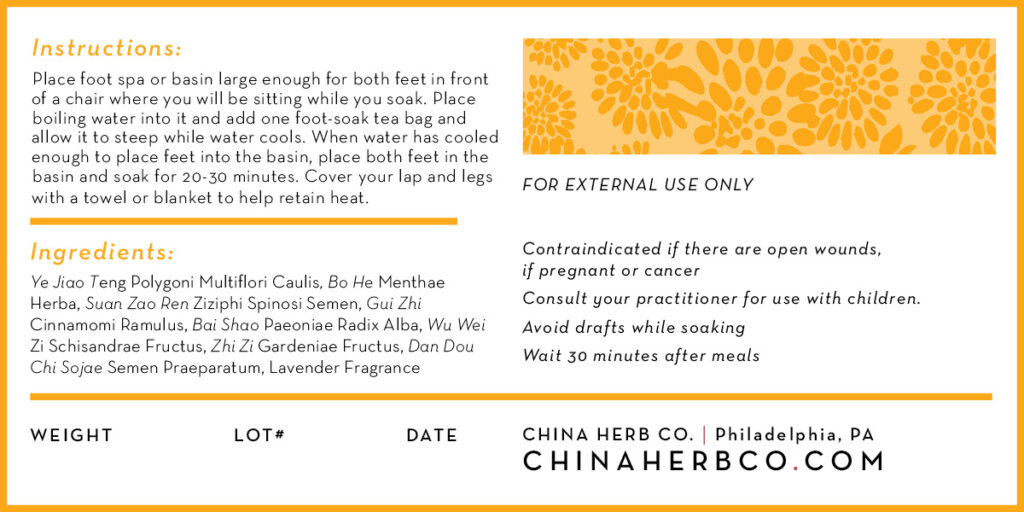
To use: place one bag in a basin or foot spa, add boiling water, and steep for several minutes. When the temperature is comfortable, soak for 20–30 minutes. Cover the lap and legs with a towel to retain heat. The Sleepy Soak works equally well in a full bath.
Contraindications & Safety
Contraindicated if pregnant or nursing. Contraindicated in the presence of open wounds. Avoid use during active cancer treatment. Consult your practitioner before use with children. Avoid drafts while soaking. Wait 30 minutes after meals.
* These statements have not been evaluated by the Food and Drug Administration. This product is not intended to diagnose, treat, cure, or prevent any disease.
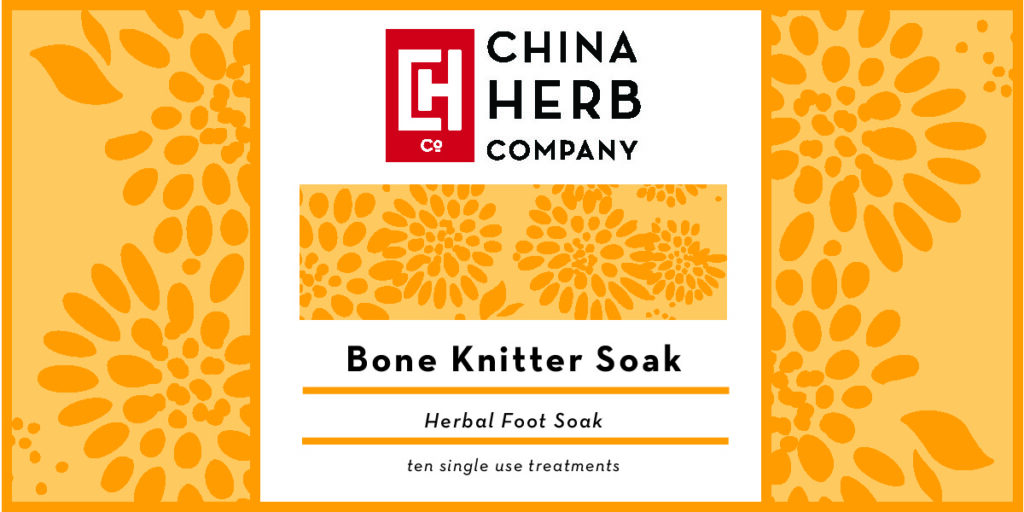
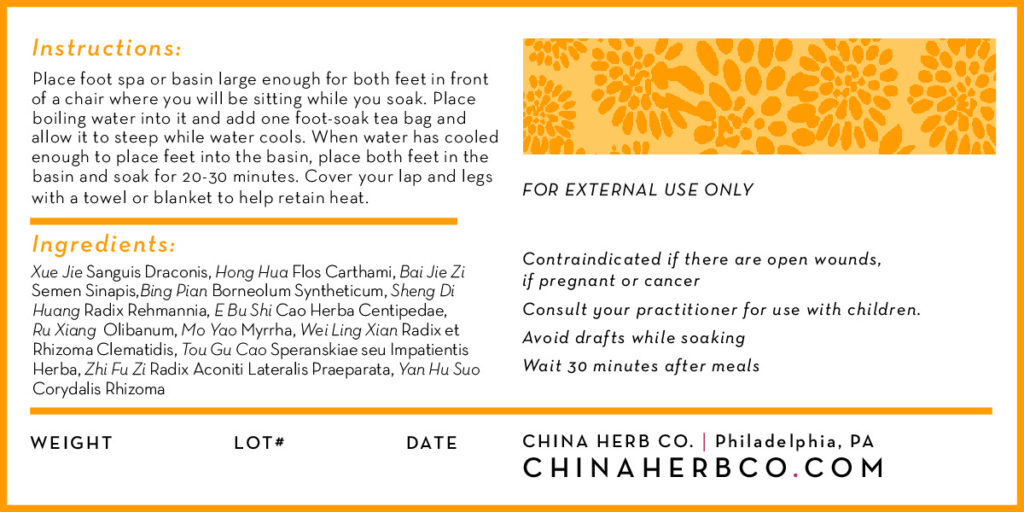
Bone Knitter Soak.
Fracture recovery stalls when blood stasis isn’t actively cleared. Swelling compresses local circulation, qi stops moving, and bone — however well-set — heals slowly in a congested environment. This formula was designed to address exactly that: move stasis out, open the collaterals, and support the tissue conditions that allow bone to knit.
Xue Jie, Ru Xiang, and Mo Yao form the classical traumatology core, moving blood, reducing swelling, and alleviating pain at the site of injury. Yan Hu Suo reinforces the analgesic action. Bing Pian and Bai Jie Zi act as penetrating agents, driving the formula through the skin into deeper tissue. Tou Gu Cao and Wei Ling Xian — bring a specific affinity for bones and joints. Zhi Fu Zi warms the channels to support tissue transformation, while Sheng Di Huang tempers the formula’s heat and supports the yin dimension of regeneration. E Bu Shi Cao (Herba Centipedae) addresses damp stasis and local inflammation at the site.
This is the soak Cara developed when her daughter broke both feet. It has been used in clinic ever since.
Tendon soak
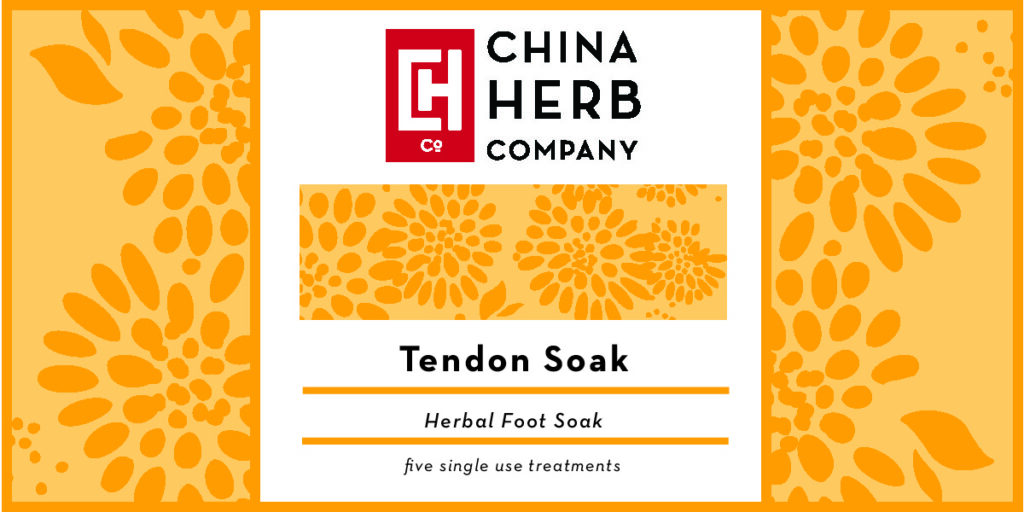
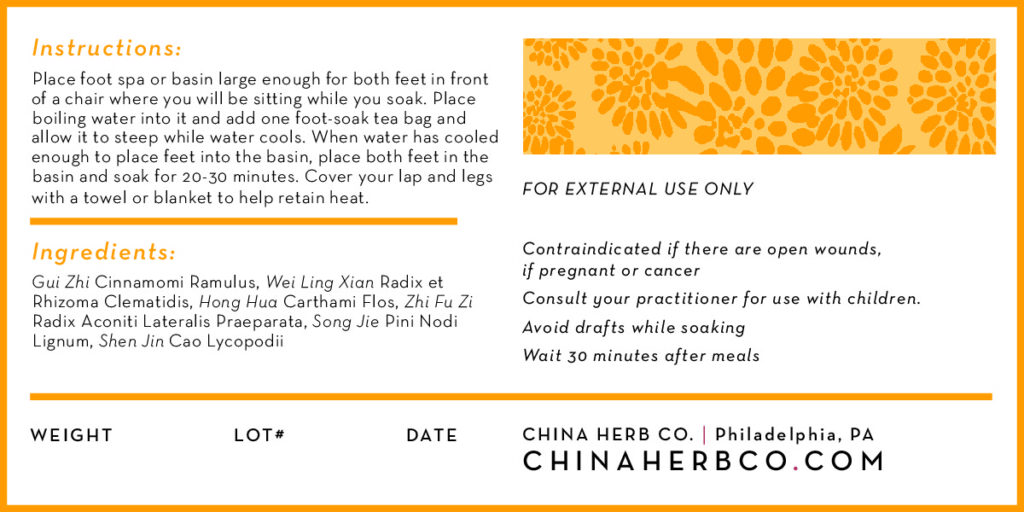
Plantar fasciitis, Achilles tendinopathy, and chronic tendon tightness often share a common pattern: cold and damp have settled into the sinews, restricting free movement of qi and blood through the channels. Left unaddressed, stasis accumulates — and the tissue becomes less responsive over time.
Wei Ling Xian and Shen Jin Cao — whose name means ‘stretch the sinews herb’ — combine a long classical history of relaxing sinew and freeing cold-damp impediment with the strong warming action of Zhi Fu Zi and Gui Zhi to open the channels and drive out cold. Hong Hua moves blood in the collaterals, and Song Jie, the knotted heartwood of pine, has a classical affinity for joints and sinew that traditional physicians considered almost structural in nature.
Best used warm and consistently — chronic tendon conditions respond to repeated exposure rather than a single soak.
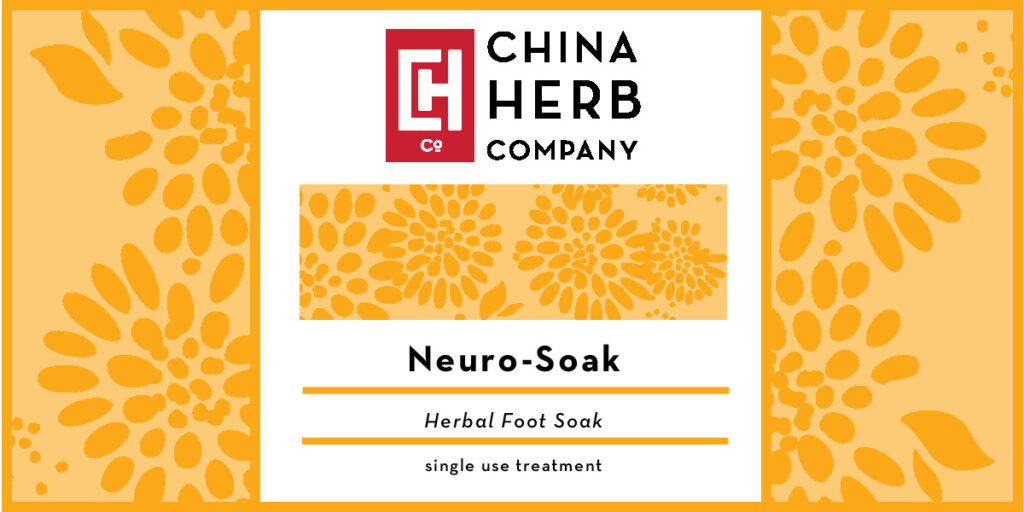
Neurosoak
Peripheral neuropathy — whether from diabetes, chemotherapy, or other causes — shares a common channel-level picture: yang and blood are failing to reach and warm the extremities. The collaterals are obstructed, circulation is compromised, resulting in the feet developing numbness, tingling, burning, or pain.
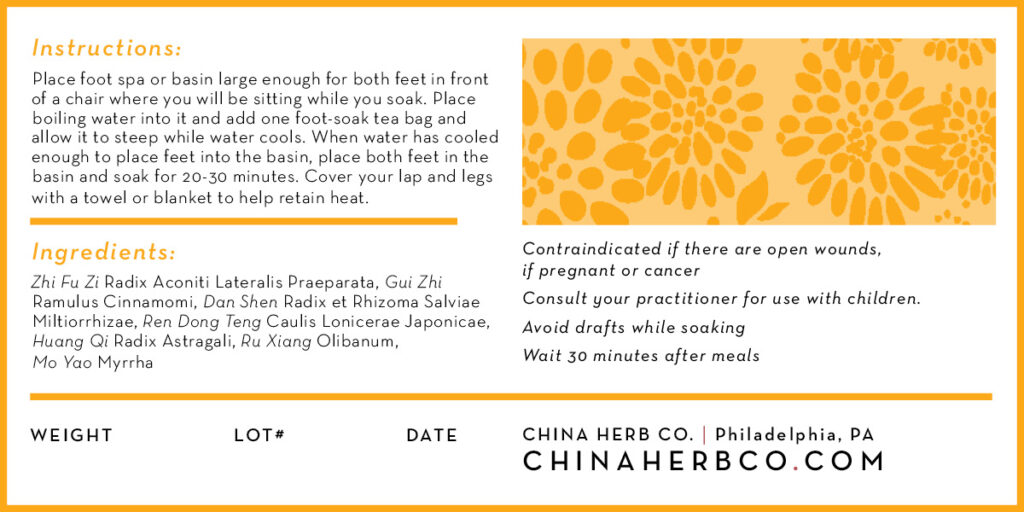
This formula leads yang to the periphery. Zhi Fu Zi and Gui Zhi form the warming core — the classical pairing for cold in the channels and limbs — while Huang Qi directs qi to the surface and supports tissue perfusion. Dan Shen, Ru Xiang, and Mo Yao open the collaterals and move blood where stasis has accumulated. Ren Dong Teng, the twining vine of Lonicera japonica, threads through the channels and clears any damp-heat component — a considered addition for patients whose neuropathy presents with mixed cold and heat signs.
Best used warm, with legs covered to retain heat. Consistent use matters more than any single soak.
Itchy soak
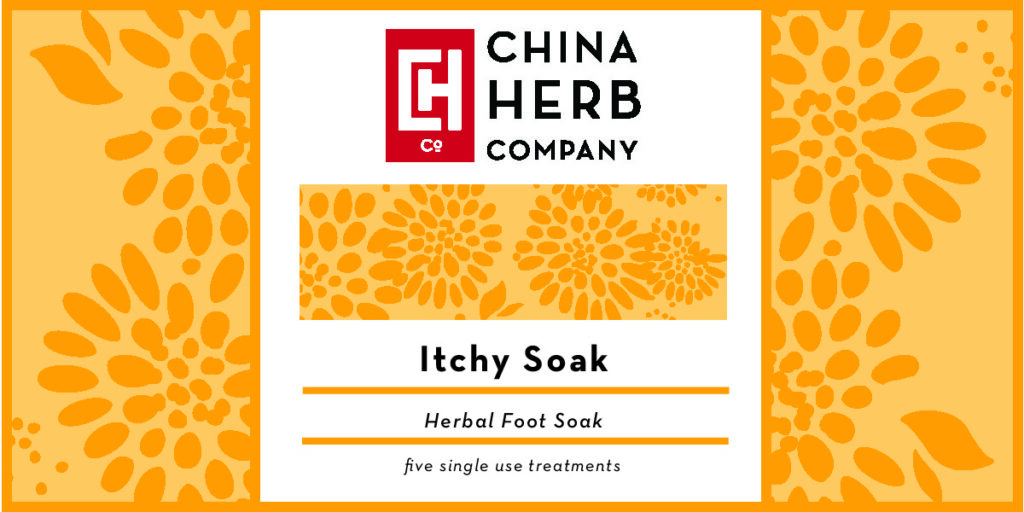
Itchy feet and lower legs is rarely simple. Whether the presentation is tinea pedis, eczematous dermatitis, or chronic damp-heat lodged in the skin, the pattern almost always involves a combination of damp-heat and wind — dampness producing the weeping, scaling, or vesicles; heat driving the inflammation and burning; wind driving the itching itself.
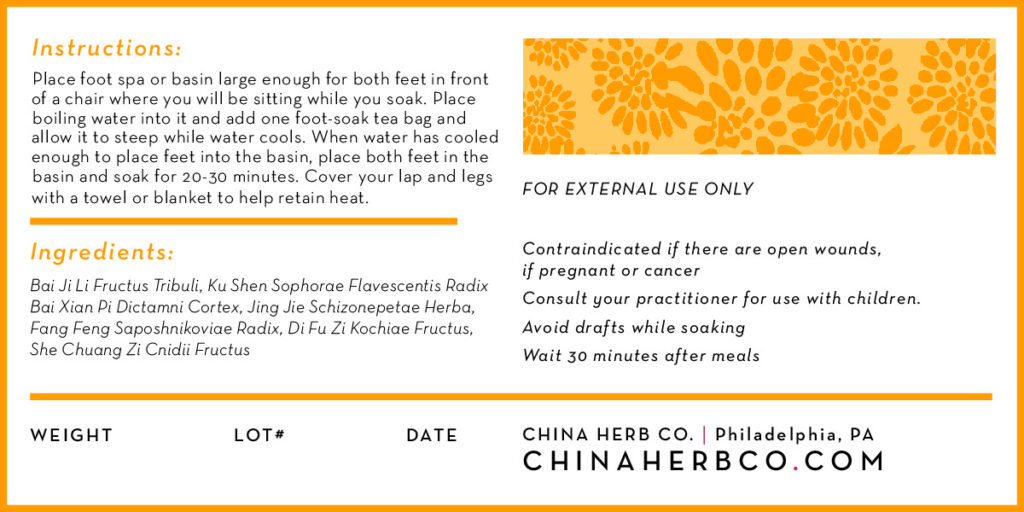
This formula addresses all three. Ku Shen, Bai Xian Pi, and Di Fu Zi form a potent damp-heat clearing core — three herbs with strong classical records for pruritic skin conditions. She Chuang Zi dries damp and reinforces the anti-fungal and antiparasitic action. Jing Jie and Fang Feng dispel wind from the skin and collaterals, Bai Ji Li rounds out the formula with additional wind-dispersing and itch alleviating actions. It also courses the liver which is useful when pruritus worsens with stress or heat.
Appropriate for tinea pedis, foot and ankle eczema, damp-heat bi with skin involvement, and chronic pruritus of the lower extremities.
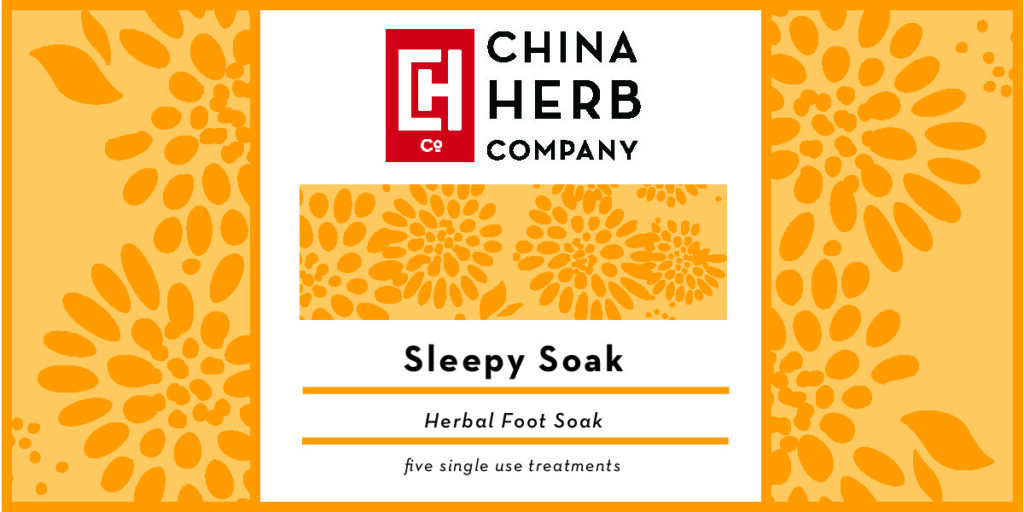
Sleepy Soak
Sleep disorders in Chinese medicine often have multiple patterns. The shen fails to root for different reasons; insufficient blood to anchor it, heat harassing the heart, liver constraint preventing the smooth transition into rest, or a nervous system that never received the signal to relax. This formula addresses the most common threads simultaneously.
Suan Zao Ren and Ye Jiao Teng form the nourishing core, quieting the heart and building the blood-level foundation that allows the shen to settle. Bai Shao and Wu Wei Zi support this action — softening the liver and consolidating what tends to scatter at night. Gui Zhi and Bai Shao together harmonize ying and wei, smoothing the physiological shift from active to restful. Zhi Zi and Dan Dou Chi — the classical pairing of Zhi Zi Chi Tang — clear heat and irritability from the chest for the patient who lies awake hot and restless. Bo He disperses constraint and clears the head. Lavender, included here as fragrance, brings its own well-documented sedative effect through inhalation.
Safe for children. Works equally well in a full bath. Best used as part of a consistent wind-down routine.
**These statements have not been evaluated by the Food and Drug Administration. This product is not intended to diagnose, treat, cure, or prevent any disease.
